
Restaurant branding beyond Logos
Discover how restaurants build identity through food and design
Restaurant Branding Strategy in the restaurant industry has evolved far beyond logos and taglines. Today, successful restaurants build cultural storytelling in restaurant —narratives that connect food, design, and identity into a cohesive experience. This deeper approach transforms a dining space into a living expression of values, heritage, and creativity.
Food as Cultural Language
Food is the most immediate way a restaurant communicates identity. Every ingredient, technique, and flavour choice tells a story. A Tamil-inspired café blending traditional spices with French pastry methods speaks of heritage meeting innovation. A German beer hall in Bengaluru adapting recipes for vegetarian diners reflects inclusivity and cultural sensitivity. Food and identity in branding is evolving to next level.
Menus themselves are storytelling tools. Naming conventions, dish descriptions, and sourcing details reinforce values. Highlighting local produce signals sustainability, while fusion dishes convey openness and creativity. When curated with intention, food becomes a language through which guests understand the brand’s ethos.
Design as Narrative
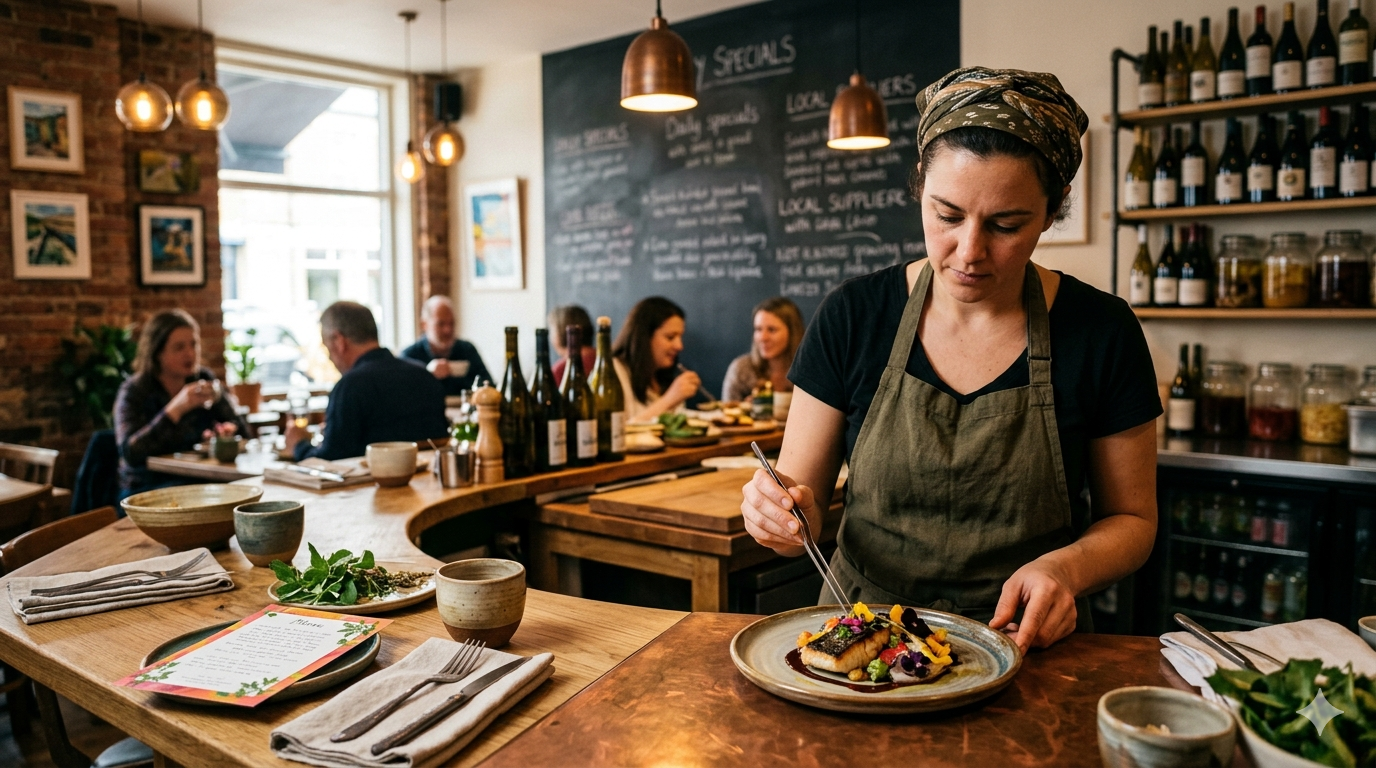
Design amplifies the cultural story. Architecture, interiors, lighting, and even tableware shape perception. Rustic, farm-to-table restaurants often use reclaimed wood and earthy textures to echo authenticity. Modern fusion spaces lean on sleek lines, bold colours, and digital art to signal innovation.
The key is alignment: design should mirror the food philosophy. When both work in harmony, the brand feels immersive and authentic.
Emotional Connection
Branding is not just aesthetic—it’s emotional. Guests don’t simply eat; they experience. The cultural story should evoke belonging, curiosity, or nostalgia. This can be achieved through subtle details: playlists that complement cuisine, uniforms that reflect personality, or stories behind signature dishes. It should be a Culinary storytelling.
Sharing origins—like recipes passed down from family or inspired by travel—invites guests into the narrative. This transparency builds trust and loyalty, turning customers into advocates.
Community as Extension of Brand
Restaurants thrive when they embed themselves in their cultural ecosystem. Hosting local art, collaborating with neighbourhood suppliers, or celebrating regional festivals strengthens identity. Restaurant community engagement takes place In multicultural cities, this approach creates spaces where diverse influences intersect, making the restaurant a hub of cultural exchange.
Practical Steps for Restaurateurs
Building branding beyond logos requires intentionality. Consider these steps, create your Restaurant Identity through design:
- Define your narrative: Decide what cultural story you want to tell—heritage, innovation, sustainability, or inclusivity.
- Align food and design: Ensure menu and interiors reflect the same values.
- Curate experiences: Think beyond the plate—music, service style, and storytelling matter.
- Engage the community: Collaborate with local artists, suppliers, and events.
- Stay authentic while evolving: Adapt to market needs without losing your core identity.
Conclusion
Restaurant branding is no longer about visual recognition—it’s about cultural resonance. Food and design are the twin pillars, but the story is the foundation. When guests feel part of a narrative larger than themselves, branding transcends logos and becomes legacy.